The Fed holds rates at 3.75% to 4% after Wednesday’s meeting, but the decision came with a warning. Governor Lisa Cook and Cleveland Fed President Beth Hammack voted for an immediate hike, the statement upgraded economic growth to “strong,” and Treasury yields rose. Chair Kevin Warsh gave no guidance for December, and futures still price a hike at that meeting as likely.
Stocks rose for a third day without much breadth. Oracle closed +10.73% after capping its future borrowing, Vertiv +16.48% on a surge in orders, and memory stocks extended their rally after SK Hynix’s results. The S&P 500 finished +0.28%, while the average stock in the index was unchanged. After the bell, Alphabet traded about −9% after its free cash flow fell further below zero, while Microsoft rose about +3% on faster Azure growth.
Index Performance
Cross-Asset Snapshot
A Third Gain Carried by Chips and Oracle
The S&P 500 closed at 7,743.98, +0.28%, or +21.38 points, its third straight gain. The Nasdaq Composite ended +0.27% at 26,549.85 and the Nasdaq 100 +0.55%. The Dow added +97.53 points, or +0.19%, to 52,475.10, and the Russell 2000 finished +0.41%.
Breadth was flat again. Of the S&P 500’s 503 stocks, 247 rose and 256 fell. An equal-weighted average of the members came to almost exactly zero and the median stock ended at −0.06%, so the index gain came from a short list of large stocks. Splitting the day’s move by industry shows the source. Semiconductors and chip equipment accounted for about 17 basis points, or roughly 70% of the gain, with Micron alone adding about 8 and Broadcom about 6. Oracle contributed another 5. Nvidia (−1.17%) took away about 9 basis points and Apple (−0.94%) about 7, which explains why the chip rally did not lift the index further. Excluding the two chip industries, the rest of the S&P 500 gained about +0.09%.
The sector funds told the same story. Technology (XLK) led at +0.80%, followed by financials at +0.45% and energy at +0.35%. Rate-sensitive sectors lagged as yields rose: utilities ended at −0.84% and real estate at −0.73%.
The index stayed inside a narrow band all day. In five-minute data, the S&P 500 never traded more than about 0.35% above Tuesday’s close and never fell below it, even around the Fed decision at 2 p.m.
Fed Holds Rates, With Two Votes for a Hike
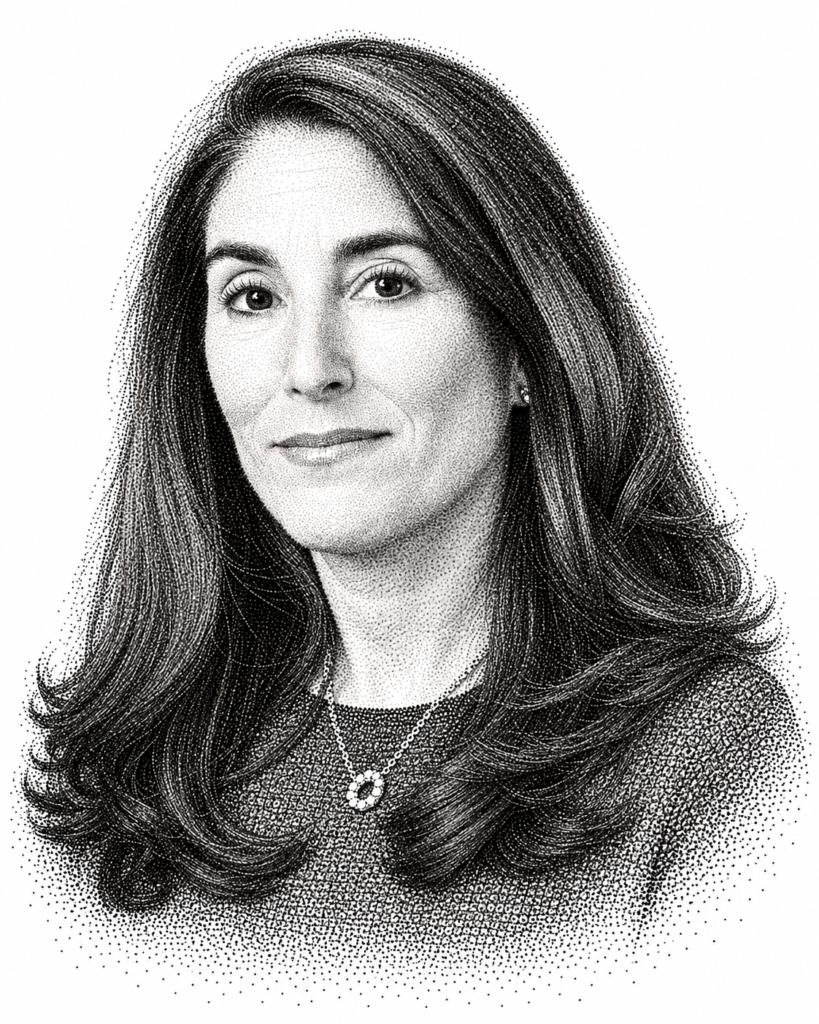
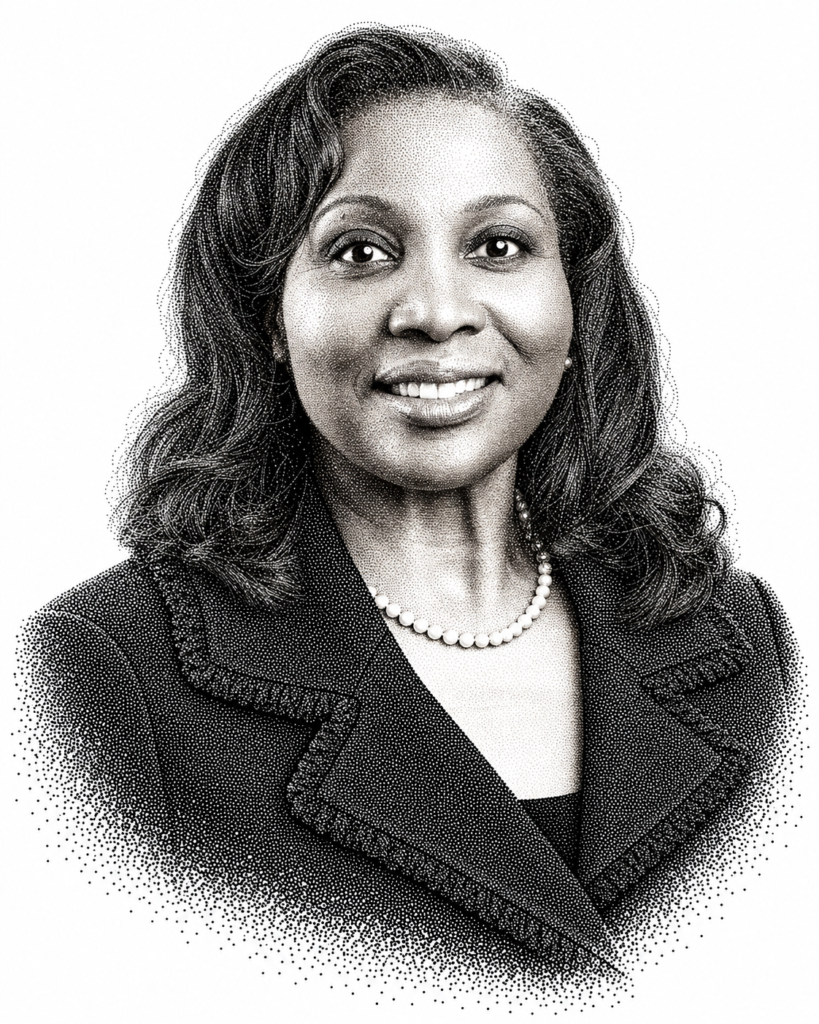
The Federal Reserve kept its target range at 3.75% to 4%, as futures had priced before the meeting. Governor Lisa Cook and Cleveland Fed President Beth Hammack dissented in favor of a quarter-point increase, after a 12-0 vote to raise rates in September, according to the FOMC statement. The statement upgraded the pace of growth to “strong,” said inflation remains elevated, and said the accumulation of more information will help the committee set policy.
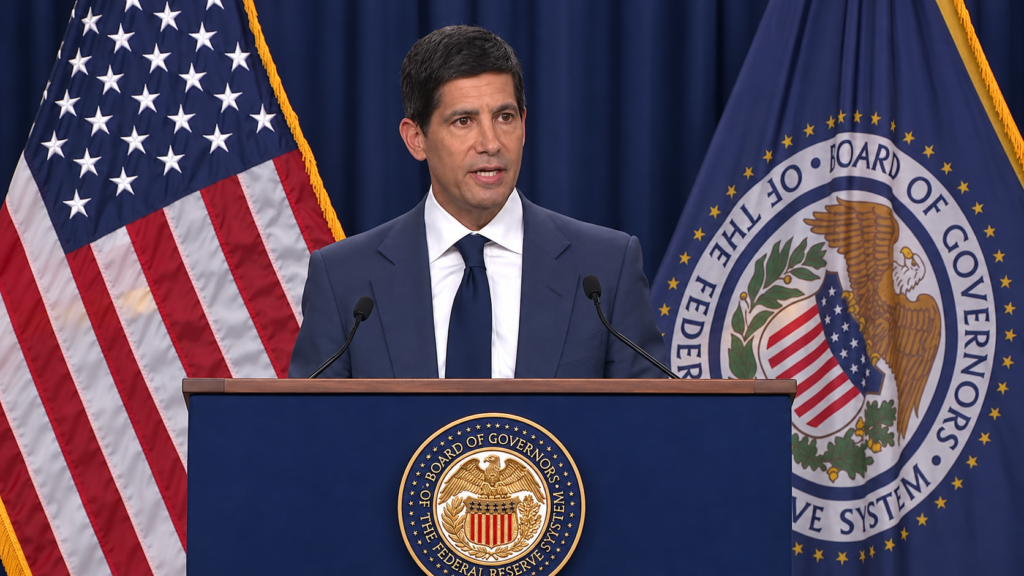
At his press conference, Chair Kevin Warsh repeated that he does not believe in forward guidance outside of a crisis, so he gave no signal for the December decision, CNBC reported. He said higher rates have affected the AI build-out, with credit spreads for some assets widening, but that capital spending is broadening rather than weakening. He described financial conditions as tighter but not tight, and said politics played no role in the decision days before the November 3 midterms. He also announced that starting in 2027, one of the Fed’s eight meetings each year will be devoted to strategy, with no rate vote or statement.
Futures still price a December hike as likely. Based on fed funds futures and the New York Fed’s effective rate, the probability of at least one increase by the December 9 meeting was about 88%, little changed from Tuesday.
The bond market heard a central bank that is not done. The 10-year Treasury yield rose 5.2 basis points to about 5.05% at 3 p.m., and the 30-year 5.6 basis points to 5.36%. The 2-year yield traded near 4.71% after the press conference, slightly below Tuesday’s level, so long-term yields rose more than short-term ones. Earlier in the day, the Bank of Canada raised its policy rate by a quarter point to 2.5%, its first increase since 2023. The dollar index ended −0.17% at 102.12, and gold −0.24% at $4,064.90.
What Moved Markets During the Press Conference
The sharpest moves of the afternoon came while Warsh was speaking, but five-minute data show that two separate things were going on.
The first was Oracle. Its shares were little changed for most of the day, at −0.82% in the 2:10 p.m. bar, while its investor day was under way. They jumped in the 2:15, 2:20 and 2:25 p.m. bars and reached +11.99% by 2:40 p.m. The timing points to the financing part of the presentation, including the cap on new borrowing, although public transcripts don’t pin down the exact minute those remarks were made. Data center operators that depend on borrowed money moved with it, with CoreWeave and Nebius at about +4.5% each over the same half hour. Nasdaq 100 futures had slipped after the 2 p.m. statement and turned up together with Oracle, gaining +0.44% between 2:15 and 2:40 p.m., and S&P 500 futures +0.26%. Because the Oracle move began about 15 minutes before Warsh took the podium, the stock rally looks like a response to Oracle more than to the Fed.
Oracle moved first, then the Nasdaq followed
Oracle shares (% vs Tuesday close, left) and Nasdaq 100 futures (% vs the 1:55 p.m. bar, right), 1:30 to 3:30 p.m. ET Wednesday
Five-minute bars; each point is the close of a bar labeled by its start time. Oracle's change is measured from Tuesday's official close ($130.53, derived from Wednesday's close of $144.54 and its +10.73% gain). Futures are the front-month contract.
View the data table
| Time (ET) | Oracle (left) | Nasdaq 100 futures (right) |
|---|---|---|
| 15:30 ET | +11.91% | +0.09% |
| 15:15 ET | +12.53% | +0.09% |
| 15:00 ET | +12.23% | +0.26% |
| 14:45 ET | +11.78% | +0.23% |
| 14:30 ET | +9.48% | +0.07% |
| 14:15 ET | +0.57% | −0.18% |
| 14:00 ET | −0.36% | −0.08% |
| 13:45 ET | −0.25% | −0.07% |
| 13:30 ET | −0.09% | −0.10% |
The second was the Fed. The 10-year yield had climbed from 5.02% to 5.045% after the statement, a hawkish first reaction to the dissents and the stronger description of growth. It then fell to 5.005% in the 2:40 p.m. bar, while Warsh said financial and credit conditions had tightened for some businesses and households since the September hike, as the Fed intended. The decline started in the 2:25 p.m. bar, a few minutes before he began, so Oracle's lower borrowing needs may have helped at the margin. The pattern of the move points to the Fed, though. The 2-year yield, which tracks expected policy rates, fell further than the 10-year, from about 4.77% at 1:40 p.m. to about 4.71% after the press conference, according to CNBC, and the dollar index moved −0.32%, from 102.40 to 102.07. A bond market reacting to less corporate borrowing would mostly move long-term yields. Short-term yields and the dollar respond to the Fed.
Yields and the dollar fell while Warsh spoke
10-year Treasury yield (%, left) and the dollar index (right), 1:30 to 3:30 p.m. ET Wednesday
Five-minute bars; each point is the close of a bar labeled by its start time. The 10-year yield is the Cboe 10-year yield index (^TNX), which Yahoo Finance shows only until about 3 p.m. ET.
View the data table
| Time (ET) | 10-year yield (left) | Dollar index (right) |
|---|---|---|
| 15:30 ET | – | 102.10 |
| 15:15 ET | – | 102.10 |
| 15:00 ET | – | 102.14 |
| 14:45 ET | 5.016% | 102.07 |
| 14:30 ET | 5.032% | 102.33 |
| 14:15 ET | 5.045% | 102.36 |
| 14:00 ET | 5.032% | 102.32 |
| 13:45 ET | 5.020% | 102.31 |
| 13:30 ET | 5.016% | 102.29 |
The two moves also faded differently. The 10-year yield was back at 5.045% by 2:55 p.m., while Oracle held most of its gain into the close and the dollar held most of its drop. The bond market's dovish read of the press conference lasted less than half an hour at the long end, which fits a statement and a chair that left the December decision open.
Oil Rises on Reports of Iran Strike Plans
Oil rose after a two-day decline. December Brent settled at $115.32, +1.3%, and December WTI at $102.78, +2.9%, CNBC reported. The U.S. has told several Gulf countries to prepare for a short but intense military campaign against Iran after the midterm elections, according to a Wall Street Journal report cited by CNBC. Houthi militants said they struck Saudi Arabia's Ras Tanura refinery, and U.S. crude inventories fell for a fourth straight week, Rigzone reported. Israel's election was heading for a stalemate, with neither Prime Minister Benjamin Netanyahu nor challenger Gadi Eisenkot holding a clear path to a majority.
The VIX ended at 16.91 (−3.48%), and bitcoin traded at about $81,500, +0.99%.
Oracle Puts a Cap on Its Borrowing
Oracle closed +10.73% at $144.54 after its investor day. The company set a target of at least $225 billion in revenue for fiscal 2030, which implies compound growth above 35% from fiscal 2026, with a non-GAAP operating margin of 40% or more and non-GAAP earnings of at least $21 a share, according to its investor day release. It reaffirmed at least $90 billion in revenue for the current fiscal year.
The financing plan mattered more to the stock. Oracle said capital spending will peak in fiscal 2027 and 2028 and step down in fiscal 2029, with free cash flow turning positive in the second half of fiscal 2028 and reaching at least $30 billion in fiscal 2029. It limited new capital-market funding from fiscal 2027 through 2030 to $20 billion, split evenly between equity and debt and excluding refinancing, on top of the $20 billion it already raised through an at-the-market stock sale this fiscal year. It also targeted net debt below 3.5 times adjusted EBITDA in fiscal 2029.
For a stock down about a third this year before Wednesday, according to CNBC, a ceiling on future dilution and borrowing answered the question that had driven the selling. The shares traded about −1.9% after hours.
The software names that reported after the bell fared worse. ServiceNow traded about −17% after forecasting fourth-quarter revenue of $4.25 billion to $4.26 billion, below the $4.36 billion analysts expected, Investing.com reported. Fortinet traded about −25% even though billings rose 29% and it raised its full-year forecast for the third time. Investors focused on service revenue, which grew 13% against 37% for products, according to Investing.com. Fortinet had already closed −5.90% in the regular session, on a day F5 (−20.43%) slid after a Piper Sandler downgrade and a fiscal 2027 outlook roughly in line with estimates, according to CNBC.
Vertiv and the Power Trade
Vertiv, which makes power and cooling equipment for data centers, closed +16.48% at $242.94. Third-quarter sales rose 61% to $4.31 billion, 55% on an organic basis, and organic orders more than doubled from a year earlier, according to the company's results release. Adjusted earnings rose 78% to $2.21 a share. Vertiv raised its full-year sales forecast by $650 million to a range of $14.45 billion to $14.85 billion and guided to fourth-quarter organic growth of 49% to 51%.
GE Vernova had a strong quarter too but closed −1.90%. Orders reached $29.3 billion, up 96% organically, with orders in its Power segment up 178%, and its backlog rose by $20 billion in the quarter to $197 billion, according to its release. It raised its 2026 free cash flow forecast to $16 billion to $17 billion from $11.5 billion to $12.5 billion and agreed to buy grid equipment maker Trench Group for about $9.0 billion. Quanta Services (+4.85%) and Eaton (+2.26%) rose with Vertiv, while Trane Technologies ended at −2.73%.
Microsoft's guidance supports the orders behind these numbers. Its capital spending and lease commitments keep rising, and Hood said capacity, not demand, limits Azure's growth.
Memory Stocks Follow SK Hynix
SK Hynix's record quarter, released Tuesday evening, set the tone in Asia. South Korea's KOSPI closed +6.63% at 6,012.44, and the Korea Exchange briefly halted program trading after KOSPI 200 futures jumped 5%, CNBC reported. After its June 22 peak of 9,114.55, the index went on to lose −38.6% in 27 trading days. SK Hynix shares ended about +10% in Seoul, according to Yahoo Finance.
In New York, Sandisk closed +7.66%, Micron +5.86%, Seagate +4.51% and Western Digital +4.08%, a day after Seagate had traded lower after its own report. Chip equipment makers rose with them: Lam Research +5.39% and Applied Materials +5.07%. Micron's gain alone added about as much to the S&P 500 as Alphabet's.
KLA, which sells inspection tools to chipmakers, closed +3.33% and traded about +4% after hours. Fiscal first-quarter revenue of $4.14 billion beat the $4.04 billion estimate, and its December-quarter forecast of $4.70 billion, plus or minus $200 million, was above expectations, according to Investing.com.
After the Bell: Alphabet Earnings Show Cash Flow Falling
Alphabet and Microsoft reported within minutes of each other after the close, and investors split them by one number: free cash flow. Alphabet's third-quarter revenue rose 25% to $127.6 billion, according to the company's earnings release. Google Cloud revenue more than doubled, rising 103% to $30.7 billion, and its operating income tripled to $11.1 billion. Search and other revenue grew 12% to $63.4 billion, and Chief Executive Sundar Pichai said search query growth was the fastest in five years. The Gemini app passed one billion users.
The rest of the report fell short. Earnings per share came in at $2.12, down from $2.87 a year earlier, and an $8.7 billion paper loss on equity investments accounted for 55 cents of that decline. Adjusted earnings of $2.67 a share fell short of the $3.02 analysts polled by LSEG expected, and revenue came in under the $128.2 billion consensus, CNBC reported. It was the company's first miss on both lines in nearly four years. Search revenue also missed the $65.0 billion estimate.
The company's releases show the two businesses moving in opposite directions this year. Search and other revenue grew 19% from a year earlier in the first quarter, 17% in the second and 12% in the third, and it was almost exactly flat from the June quarter at $63.4 billion. Google Cloud went the other way, from 63% growth in the first quarter to 82% and then 103%. Cloud now brings in about half as much revenue as search, and it is the business that needs the new data centers.
Cash flow drew the most attention. Operating cash flow fell to $42.3 billion from $48.4 billion a year earlier while purchases of property and equipment more than doubled to $51.4 billion. Free cash flow was −$9.07 billion, the second negative quarter in a row, against analyst expectations of about −$2.7 billion. Chief Financial Officer Anat Ashkenazi kept this year's capital spending forecast at $195 billion to $205 billion and said spending will "increase significantly" in 2027, with details on the next call. Annual capital spending is expected to pass $300 billion next year, according to CNBC.
Alphabet is now paying for that spending with outside money. In the third quarter alone it issued $28.7 billion of senior notes and sold $12.4 billion of Class A and Class C stock through its at-the-market program, and it bought back no stock. Over the first nine months, its cash flow statement shows $85.2 billion of new debt, $42.9 billion of common stock and $19.1 billion of mandatory convertible preferred stock. Long-term debt has nearly tripled since December to $125.1 billion. Over the same nine months, operating cash flow of $127.1 billion fell about $5 billion short of capital spending of $132.0 billion, while cash and marketable securities more than doubled to $265.1 billion.
The company has raised far more than this year's spending gap required. The cash pile is a reserve for the larger spending planned for 2027, and the funding is no longer coming from the advertising business alone.
Alphabet's Class A shares closed the regular session +1.47% at $324.89 and traded near $294.50 at 7:15 p.m. ET, about −9.4% below the close, according to five-minute data. At its low around 5:30 p.m., the stock stood at about −11.5%. With a market value of about $3.9 trillion, a drop of that size erases roughly $360 billion.
Microsoft Keeps Its Cash Flow Positive
Microsoft's report for its fiscal first quarter met the test Alphabet missed. Revenue rose 19% to $92.3 billion and adjusted earnings came to $4.89 a share, according to the company's earnings release, against forecasts of $4.73 and $90.69 billion. Azure grew 48%, up from 42% in the June quarter, and Microsoft disclosed its revenue in dollars for the first time: $33.2 billion. Microsoft Cloud revenue rose 30% to $63.9 billion, and the commercial remaining performance obligation, the company's contracted backlog, rose 73% to $677 billion.
The guidance was stronger still. Chief Financial Officer Amy Hood forecast 49% to 50% Azure growth at constant currency for the December quarter, against a consensus near 45%, and said demand still exceeds supply, CNBC reported. She also said some third-party capacity deliveries slipped into the second half of the fiscal year and that capital spending, including finance leases, will top $50 billion in the December quarter.
Operating cash flow rose to $58.0 billion from $45.1 billion. Purchases of property and equipment doubled to $39.4 billion, and principal payments on finance leases added $1.0 billion. That leaves free cash flow of about $17.6 billion after the lease payments, or $18.6 billion by the company's own measure, which excludes them.
The 10-Q filed with the results adds a figure the release leaves out. As of September 30, Microsoft had signed $364.6 billion of leases, mostly for data centers, that have not yet started, up from $329.1 billion in June and $92.7 billion fifteen months ago. Those commitments do not appear in capital spending or on the balance sheet until each lease begins — between fiscal 2027 and 2034 — and some depend on contractual conditions being met. Microsoft funds part of its build-out through landlords and capacity providers, which keeps the cash flow line positive today and moves part of the cost into future years.
Microsoft's data center leases waiting to start
Leases signed but not yet commenced, primarily for data centers, at each quarter end ($ billions)
Quarter ends are calendar dates (Microsoft's fiscal year ends June 30). Through March 2025 Microsoft disclosed operating and finance leases separately; those quarters show the sum. Some recent arrangements are subject to contractual conditions being met.
View the data table
| Quarter end | Leases not yet commenced ($B) |
|---|---|
| Sep '26 | $364.6B |
| Jun '26 | $329.1B |
| Mar '26 | $196.6B |
| Dec '25 | $155.1B |
| Sep '25 | $106.2B |
| Jun '25 | $92.7B |
| Mar '25 | $99.2B |
| Dec '24 | $105.4B |
| Sep '24 | $116.1B |
Hood said Microsoft will keep generating free cash flow through the fiscal year and has not yet tapped the debt markets. Its shares closed the regular session −0.06% at $531.01, reached about +7% around 6 p.m. during the call, and traded about +2.9% at 7:15 p.m.
Put next to each other, the four largest AI spenders have moved apart. Meta reported negative free cash flow last week and has turned to the stock market, as Tuesday's recap covered. Alphabet is now in the same position. Microsoft is the one still covering its spending from operating cash, helped by leases that push part of the bill into later years. Amazon reports on Thursday.
Alphabet's free cash flow falls further below zero
Free cash flow after AI spending: operating cash flow minus capital spending incl. finance lease principal, $ billions per calendar quarter
Calendar quarters. Capital spending = purchases of property and equipment + principal payments on finance leases. Alphabet's Q3 '26 figure uses purchases of property and equipment only, because its 10-Q with finance lease payments is not yet filed; the company's own free cash flow figure is −$9.065 billion. Amazon's tagged purchases are gross of proceeds and incentives, so its figure here is slightly lower than the company's own; its Q3 '26 report is due Oct 29.
View the data table
| Quarter | Microsoft | Alphabet | Amazon | Meta |
|---|---|---|---|---|
| Q3 '26 | $17.6B | −$9.1B | – | −$2.1B |
| Q2 '26 | $18.7B | −$6.2B | −$9.2B | $0.8B |
| Q1 '26 | $15.0B | $9.6B | −$18.6B | $12.4B |
| Q4 '25 | $5.2B | $23.0B | $14.6B | $14.1B |
| Q3 '25 | $25.0B | $24.4B | $0.1B | $10.6B |
| Q2 '25 | $24.9B | $5.2B | −$0.1B | $8.6B |
| Q1 '25 | $19.9B | $18.8B | −$8.4B | $10.3B |
| Q4 '24 | $6.0B | $24.7B | $17.5B | $13.2B |
| Q3 '24 | $18.5B | $17.5B | $3.0B | $15.5B |
| Q2 '24 | $22.9B | $13.3B | $7.1B | $10.9B |
| Q1 '24 | $20.6B | $16.8B | $3.3B | $12.5B |
Around the Market
The Magnificent Seven were mixed during the session. Alphabet closed +1.47% and Amazon +0.59% ahead of their reports. Microsoft ended at −0.06%, Tesla at −0.80%, Apple at −0.94%, Nvidia at −1.17% and Meta at −1.24%. After hours, Nvidia and Amazon traded about −0.6% each as Alphabet slid, while Meta was about +0.9%.
Boston Scientific closed −5.84% after forecasting fourth-quarter sales 1% to 3% below a year earlier, StockTitan reported. Enphase (about −17%) slid after guiding fourth-quarter revenue to $225 million to $255 million on weak residential solar demand, and Robinhood ended at −3.31% after its profit missed estimates. Baker Hughes closed −7.36% after reporting a 33% drop in quarterly net income on acquisition-related costs, even as orders rose 31%, according to its release. Waste Management (−4.52%) fell after its report.
Wendy's (about +14%) jumped after The Wall Street Journal reported that Nelson Peltz's Trian has offered to take the chain private for about $1.4 billion, according to CNBC. Brinker International and Wingstop each ended about +15% on quarterly results. Regional banks lagged, with the SPDR S&P Regional Banking ETF trading below −1% in the afternoon.
After the close, Carvana traded about +8% after revenue of $8.04 billion beat estimates, and Chipotle about +7% after reaffirming its outlook. T-Mobile and Equinix traded slightly higher.
What's Next
Thursday brings the first estimate of third-quarter GDP and September personal income and spending at 8:30 a.m. ET, including the PCE price index, the Fed's preferred inflation gauge. Economists expect headline PCE prices to rise 0.5% for the month, lifting the annual rate to 3.7%, and the core measure to rise 0.3%, according to CNBC. Weekly jobless claims are due at the same time.
Eli Lilly, Mastercard, Merck, Caterpillar and Linde report before the open. After the close, Amazon reports along with Intel, Sandisk, Starbucks and Coinbase. Amazon is the last of the four largest AI spenders to report, and its free cash flow after capital spending and finance leases was already −$9.2 billion in the June quarter.
Friday brings Exxon Mobil, Chevron, AbbVie and General Dynamics. The midterm elections follow on Tuesday, November 3.
Bottom Line
The Fed held rates and left December open, but two dissents in favor of a hike and a stronger description of growth showed that the pressure to tighten has not eased. The bond market's relief during Warsh's press conference lasted less than half an hour at the long end, and the 10-year yield finished higher on the day.
Stocks belonged to the suppliers of the AI build-out: memory makers after SK Hynix, Vertiv on its orders, and Oracle after it capped its borrowing. After the bell, the question shifted from how much the largest companies will spend to how they will pay for it. Microsoft grew Azure faster than expected and kept its cash flow positive, though more of its build-out now runs through future lease payments. Alphabet doubled its cloud revenue, yet its spending has outrun its operating cash for two quarters and is being funded with debt and new stock.
Thursday puts the PCE report and Amazon's numbers on the same day, one test for the Fed and one for the spending story.
Leave a Reply