This is Part 1 of my reading notes on The Great Leveler by Walter Scheidel. For the full review, start here.
How did inequality begin? And why, once it started, did it never stop?
The Prehistoric Baseline
Scheidel opens the book not with kings or empires, but with primates. Gorillas, chimpanzees, bonobos — all live under rigid dominance hierarchies. Leave your group, and another group’s males will likely kill you. Stay, and you submit to whoever sits at the top.

Early humans inherited this baseline. But something changed.
The development of throwing weapons — made possible by a gradual shift in shoulder anatomy unique to humans — allowed smaller individuals to threaten dominant males from a distance. Ambushes became possible. Coalitions formed. The alpha’s grip loosened. For a long stretch of human prehistory, this biological shift acted as a powerful equalizer.
Add to that the hard constraints of hunter-gatherer life — you can only own what you can carry — and the conditions for sustained inequality simply didn’t exist. Wealth couldn’t accumulate. Hierarchy couldn’t harden.
But this wasn’t equality by design. It was equality by limitation.
The Agricultural Trap
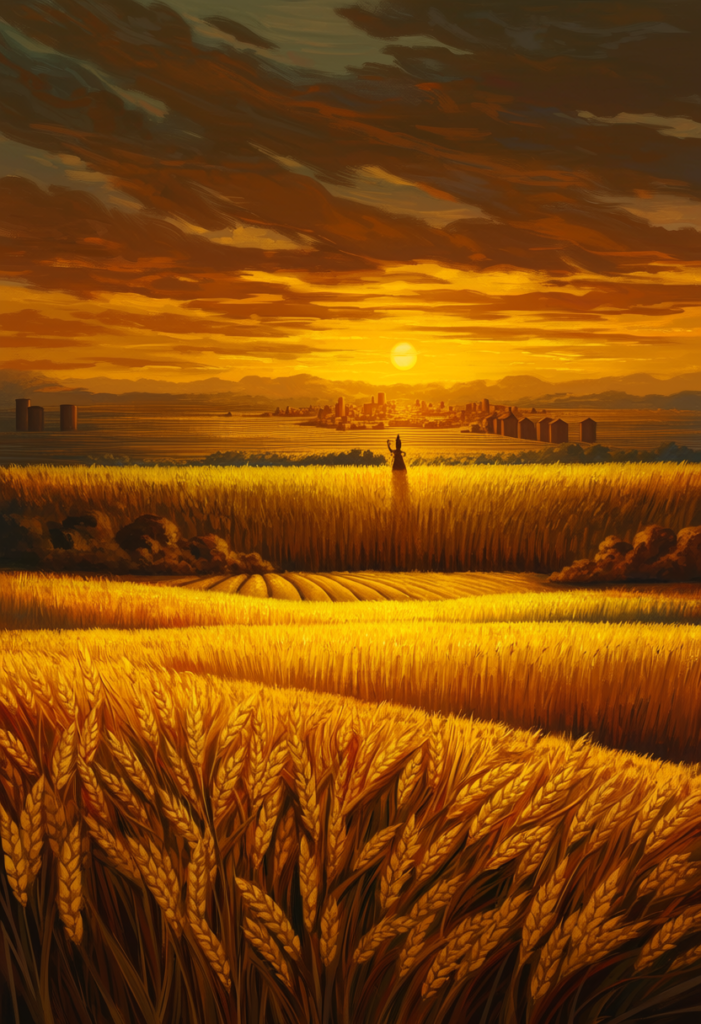
The shift begins with agriculture.
Scheidel cites a cross-society study of 21 small-scale communities at different levels of development identified two key drivers of inequality: ownership of land and livestock, and the ability to pass wealth to the next generation. Farming and herding societies showed wealth transmission rates roughly twice as high as hunter-gatherer groups.
Scheidel breaks wealth into three categories:
| Type | Definition | Matters most to |
| Embodied wealth | Strength, reproductive success | Hunter-gatherers |
| Relational wealth | Networks, alliances | Universal |
| Material wealth | Land, livestock, tools | Farmers & herders |
The critical variable isn’t how much wealth exists. It’s transmissibility — how easily wealth can be passed to the next generation.
This is the hinge on which everything turns. In hunter-gatherer societies, a bad season, a disease, or a raid could wipe out whatever advantage someone had built. The distribution reset. But once material wealth became heritable, those same shocks stopped resetting anything. They compounded instead. A family that survived a famine with land intact didn’t return to the mean — they pulled further ahead of those who didn’t. Random misfortune, over generations, became structural inequality.
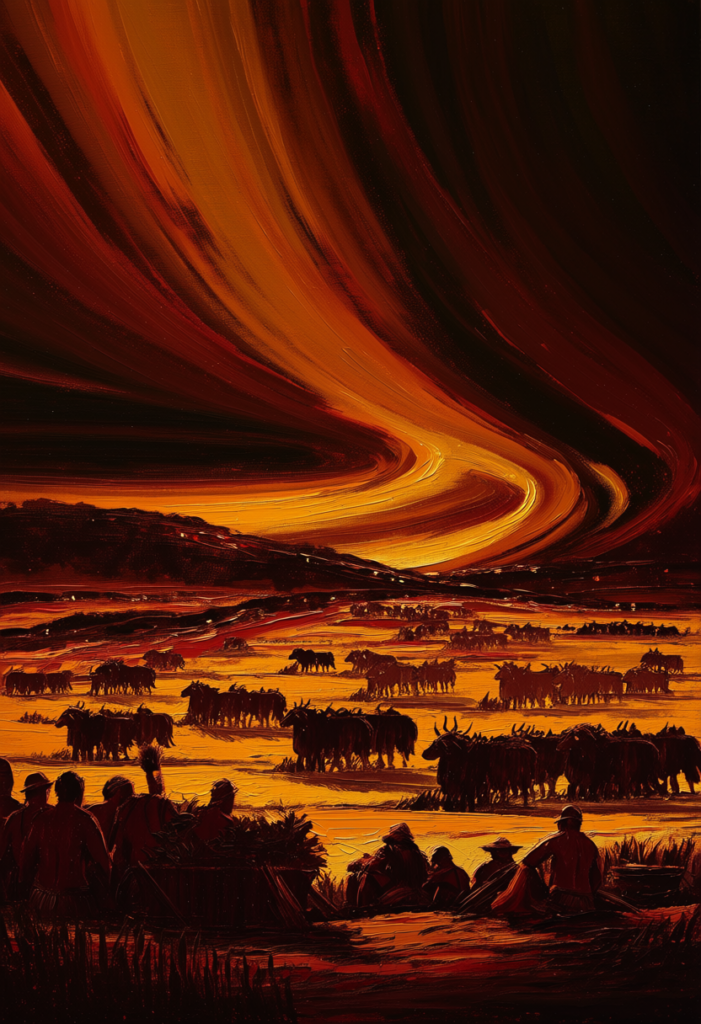
Scheidel draws on a survey of 186 societies to make the downstream effect concrete: four out of five hunter-gatherer groups had no formal leadership at all, while three quarters of agricultural societies were organized as chiefdoms or states.
Farming didn’t just feed more people. It built hierarchy — and made that hierarchy stick.
The State and the First 1%
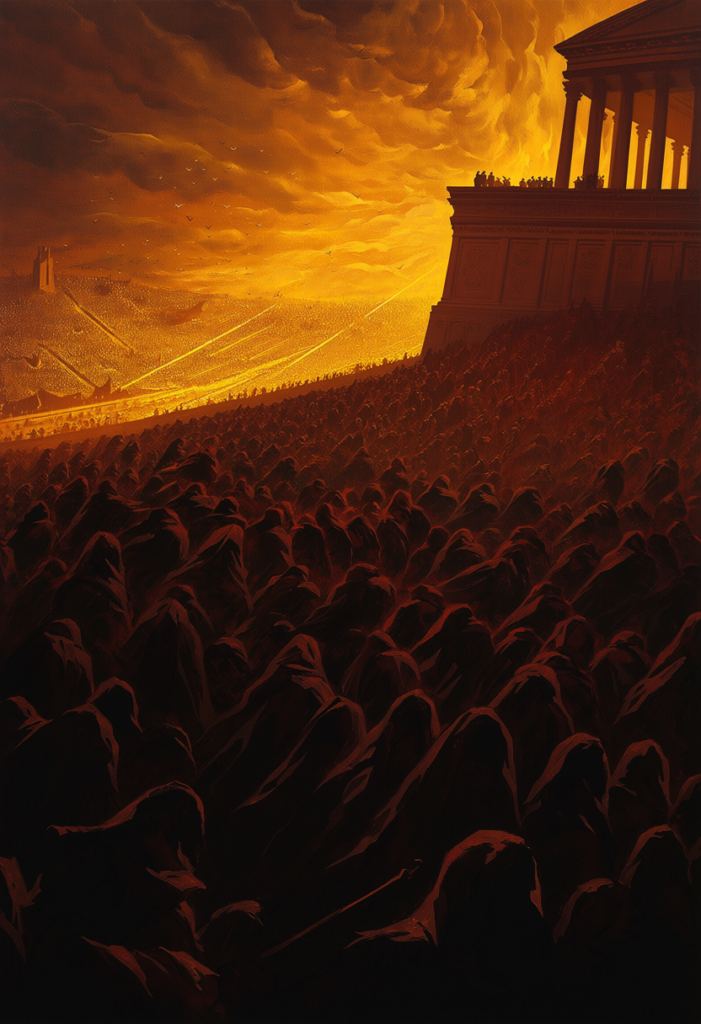
Then came the state. And with it, the original 1 percent.
Scheidel is careful here. Inequality preceded the state; it didn’t require one. But once states formed, they amplified what was already happening.
Early states emerged from recognizable pressures: elites controlling trade routes, leaders gaining authority to manage increasingly complex populations, and violent competition over scarce resources selecting for centralized, hierarchical structures. City-states that resisted this logic were typically absorbed or destroyed by those that didn’t. Empires replaced empires. The personnel changed. The structure didn’t.
Wealth, historically, has always been acquired in one of two ways: making or taking. The state raised the ceiling on both. Surplus production and hereditary property rights expanded how much could be accumulated. Political office created new avenues for extraction — rents, tribute, corruption, taxation.
Early states often began with relatively egalitarian land arrangements. Over time the pattern was consistent: capital owners absorbed more land, political leaders layered tribute structures onto existing holdings, tenancy and debt bondage emerged, slavery was added. The state simultaneously needed to protect its tax base and depended on the very elites who were hollowing it out.
Inequality didn’t require malice. It required stability — and time.
The Engines of Empire: Han China and Rome
This logic reached its clearest expression in the ancient super-empires. Despite vastly different cultures, Han China and the Roman Empire ran on the same extractive engine.
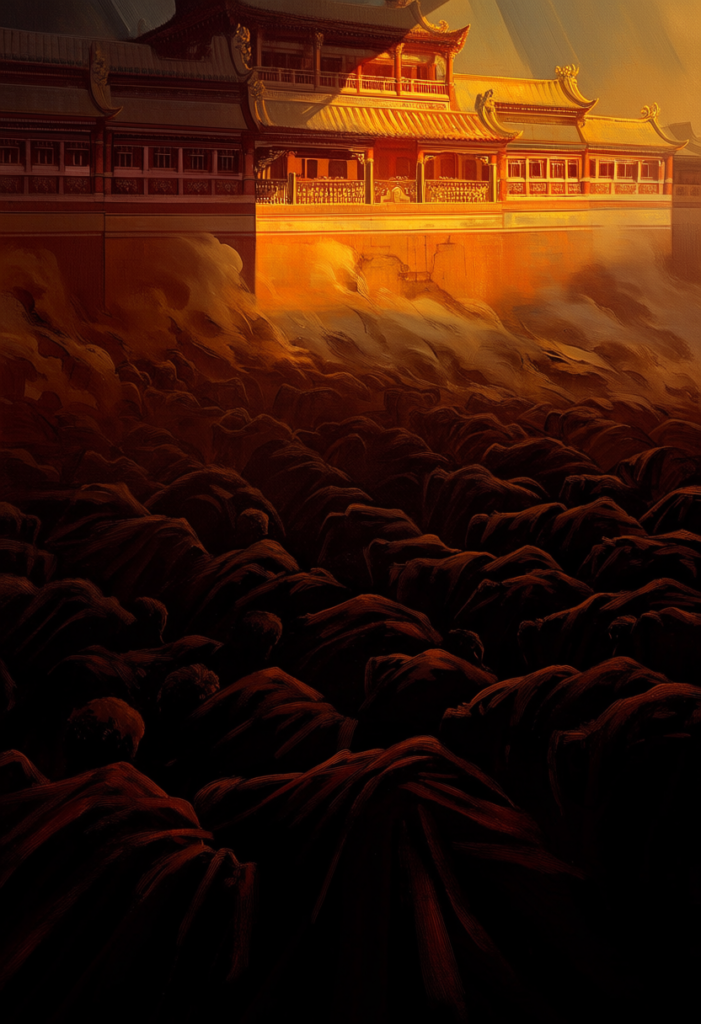
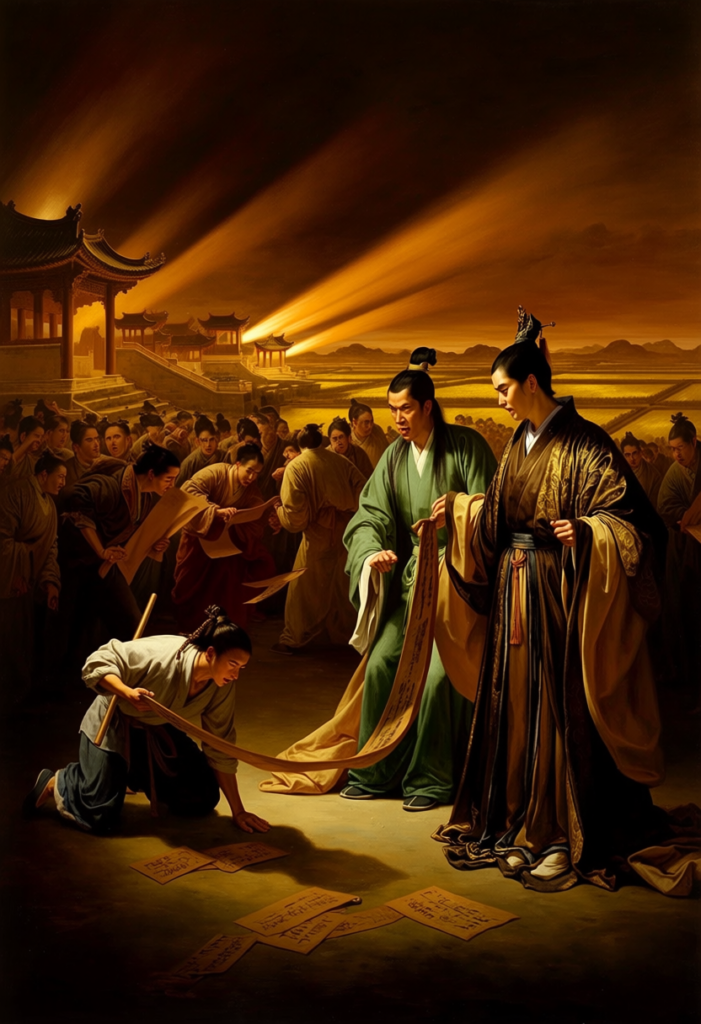
In Han China, merchant elites and moneylenders accumulated land by extending high-interest loans to small farmers, then seizing property when debts went unpaid. The state periodically intervened — capping land ownership, monopolizing salt and iron — but elites worked around restrictions through political connections and outright corruption. The pattern repeated across dynasties: long peace, concentration of wealth, eventual crisis.
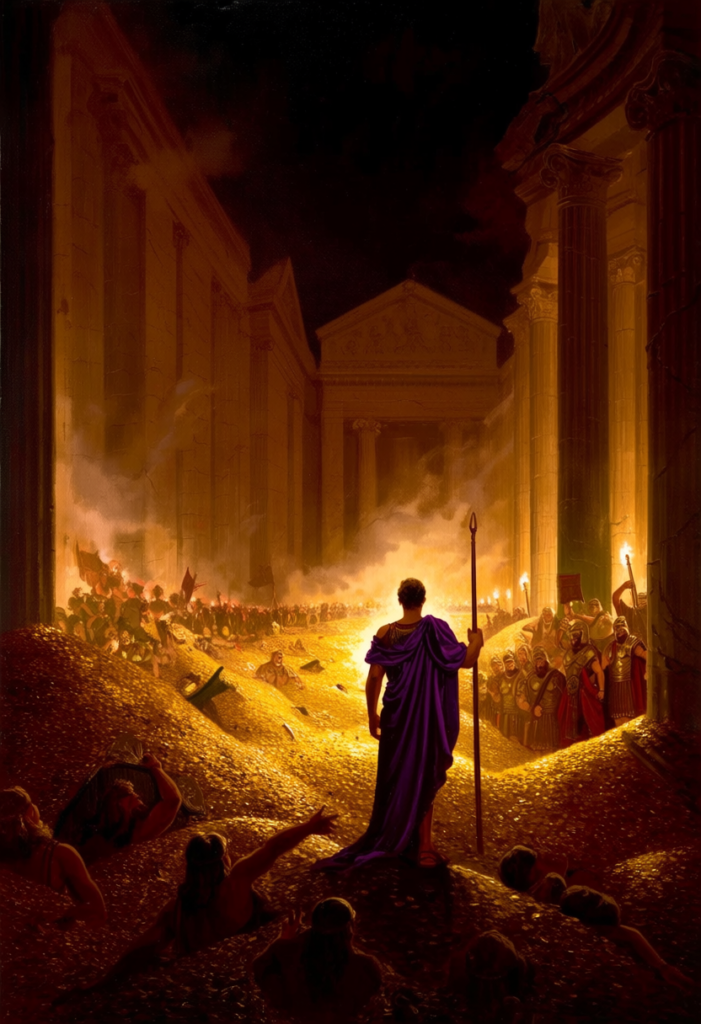
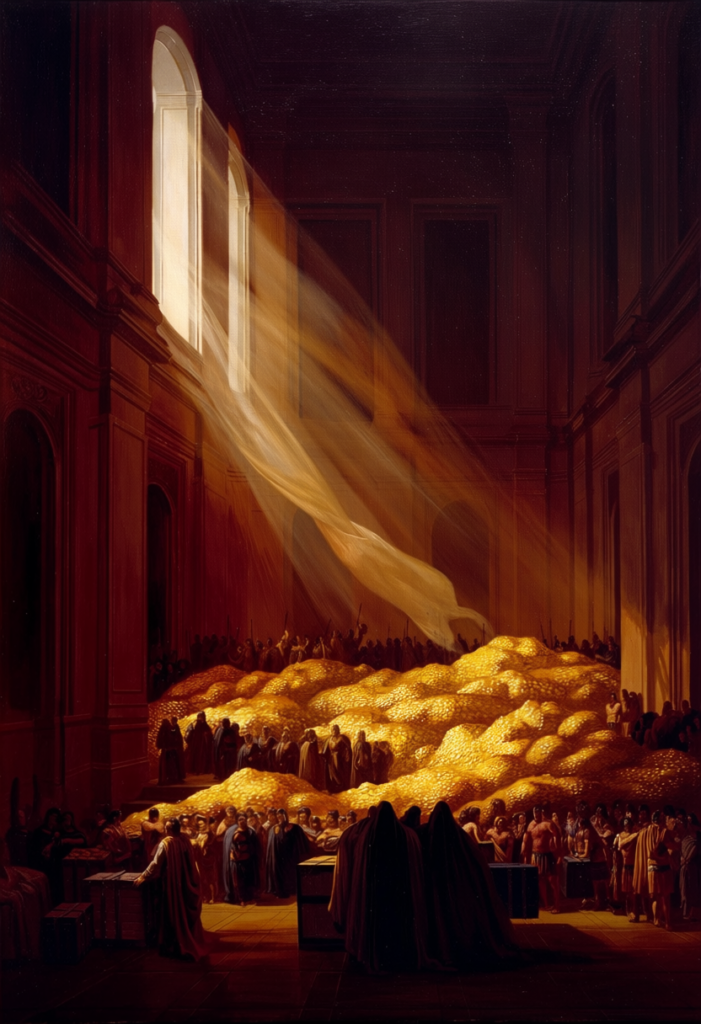
In Rome, the scale was staggering. Roughly 1.5% of households absorbed somewhere between a sixth and a third of the empire’s total output. Roman aristocrats built fortunes not just through commerce but through provincial administration, military conquest, and political rents — extracting from territories with minimal legal constraint. A provincial governor could legally charge interest rates eight times the Roman standard. The wealth that flowed back to the center was vast.
What both empires show is that prolonged stability — the absence of war, collapse, or epidemic — was not neutral. It was actively inegalitarian. The longer the peace, the more wealth concentrated at the top.
The Ups and Downs: Plague as Equalizer
If stability breeds inequality, what breaks it?
The collapse of the Western Roman Empire was one answer. It dismantled the property networks and political structures that sustained elite wealth across multiple regions simultaneously. New elites emerged, but the scale of concentration couldn’t be rebuilt quickly.
The more dramatic case is the Black Death.
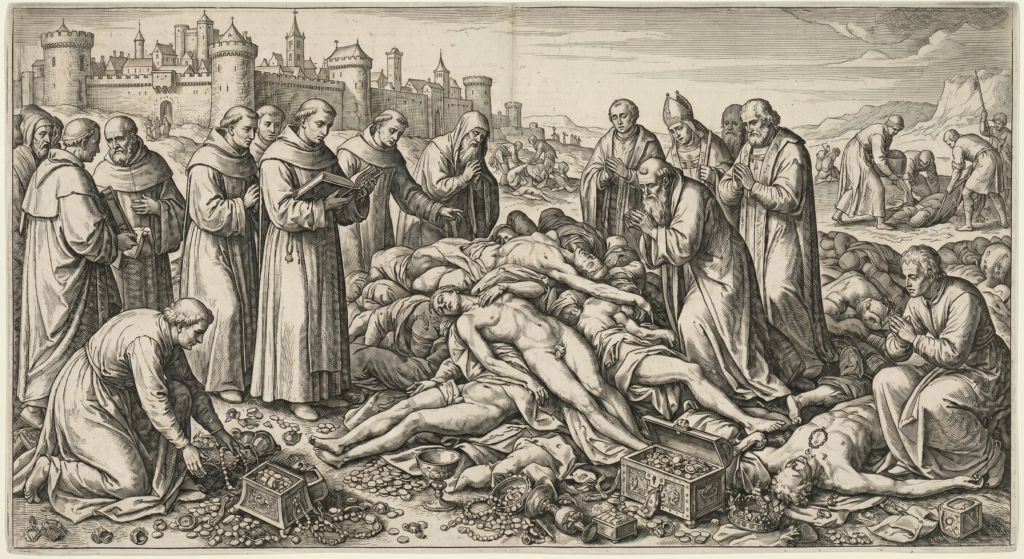
In the mid-14th century, plague killed more than a quarter of Europe’s population — in some regions, closer to half. The demographic shock was so severe it flipped the basic economics of land and labor. With workers suddenly scarce, real wages roughly doubled. Land rents fell. Elite fortunes contracted. For several generations, wealth inequality declined sharply across much of Europe.
But the relief was temporary. As populations recovered through the 15th and 16th centuries, the dynamic reversed. The rise of global trade, urbanization, and the fiscal-military state created new channels for wealth concentration. Capital returns outpaced economic growth. Elites adapted — from feudal lords to commercial landlords to merchant princes.
By the 19th century, inequality across much of Europe had returned to levels comparable to the height of the Roman Empire. The intervening centuries of economic development hadn’t structurally changed the distribution. They had changed its form.
The Pattern
Across everything in Part 1, one logic keeps reasserting itself.
Equality in early human societies wasn’t a social achievement. It was a physical constraint — enforced by the limits of what could be owned, carried, and passed down. The moment those constraints lifted, inequality followed. Every time.
Agriculture created surplus. Surplus created heritable property. Heritable property created dynasties. Dynasties created states. States created extraction. And extraction, left undisturbed, concentrated wealth at the top until something violent enough came along to break it apart.
That last clause — until something violent enough came along — is what the rest of the book is about.
Why It Matters
Part 1 does one important thing: it removes the moral surprise from inequality.
If you’ve ever wondered why redistribution is so difficult, why wealth keeps concentrating despite democratic systems and progressive taxation, why every generation seems to rediscover the same problem — Scheidel’s answer starts here.
The forces that produce inequality aren’t aberrations or policy failures. They’re the default setting. They’ve been operating, in recognizable form, since the first farmers planted the first fields.
What’s rare isn’t inequality. What’s rare is anything powerful enough to interrupt it.
Next: Part 2 — What War Actually Does to Inequality
Leave a Reply